

Specifying the right equipment for chemical injection in industrial piping is a decision that carries significant consequences for process efficiency, equipment longevity, and safety. An injection quill system plays a critical role in ensuring that chemicals are delivered precisely into the flow stream, but selecting the wrong specification leads to inadequate mixing, premature corrosion, or even system failure. Understanding the factors that govern this decision before specification begins saves considerable time, cost, and operational risk later.
What an Injection Quill Does and Why Specification Matters
An injection quill is a tube or lance inserted into a pipeline through a fitting, designed to deliver chemical additives directly into the centre of the flowing fluid. This central injection point ensures better dispersion of the chemical into the flow stream compared with simple point injection at the pipe wall.
The specification of this equipment affects:
- How uniformly the chemical mixes with the process fluid
- Whether the quill material is compatible with both the chemical being injected and the process fluid
- The long-term integrity of the pipeline at the injection point
- The ease of maintenance and replacement without process shutdown
Getting this right from the outset is far more straightforward than correcting a poorly specified installation later.
Factor 1: Process Fluid Characteristics
The nature of the process fluid flowing through the pipeline is the starting point for any injection quill specification. Key properties to assess include:
- Flow velocity: too low and the injected chemical may not disperse adequately; too high and the quill itself may be subject to vibration and fatigue
- Temperature: high-temperature processes require materials and seals rated for the operating range
- Pressure: the quill must be rated for the operating pressure of the pipeline, including any pressure spikes
- Corrosivity: acidic or highly reactive process fluids require quill materials that resist degradation
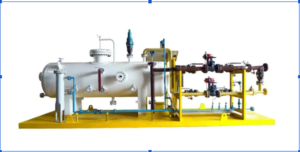
Oil field equipment manufacturer selections for injection quills in upstream and midstream applications routinely encounter all of these variables simultaneously, which is why a thorough process fluid assessment always comes first.
Factor 2: Chemical Compatibility of the Quill Material
The chemical being injected and the quill material must be fully compatible. Common quill materials include stainless steel grades, Hastelloy, Monel, and various engineered polymers, each suited to different chemical environments.
| Quill Material | Suitable Chemical Environment |
| 316 Stainless Steel | Mild acids, scale inhibitors, general corrosion inhibitors |
| Hastelloy C276 | Chlorides, strong acids, oxidising chemicals |
| Monel | Hydrofluoric acid, salt water, reducing acids |
| PTFE lined | Highly corrosive chemicals where metal contact must be avoided |
A mismatch between quill material and injected chemical leads to accelerated corrosion of the quill itself, contamination of the process fluid, and potentially catastrophic failure at the injection point.
Factor 3: Injection Point Location Within the Pipe
Where along the pipeline the injection point is located affects both the mixing performance and the practical installation and maintenance of the injection quill in piping systems. Key considerations include:
- The distance from the injection point to downstream equipment, adequate straight pipe run allows the chemical to mix before reaching sensitive equipment
- Avoiding injection immediately upstream of bends, valves, or other fittings that could concentrate the chemical against pipe walls
- Ensuring accessibility for maintenance, replacement, or sampling
- Complying with any process engineering requirements for minimum mixing length
Factor 4: Quill Length and Extension Into the Flow Stream
The quill should extend to approximately the centre of the pipe, or to the point of maximum flow velocity in the cross-section. Quills that extend too far create excessive drag and vibration risk; quills that are too short fail to deliver the chemical into the main flow stream effectively.
For large diameter pipelines, this calculation requires attention to both the pipe internal diameter and the flow velocity profile, a turbulent flow profile distributes chemical more readily than a laminar one, and the quill length specification should reflect this.
Factor 5: Check Valve and Isolation Requirements
Every injection quill installation should incorporate appropriate check valves and isolation arrangements to:
- Prevent backflow of process fluid into the chemical injection system
- Allow safe withdrawal and replacement of the quill without process shutdown where a retrieval mechanism is specified
- Protect chemical dosing pumps from pressure surges in the process line
The check valve specification should be matched to the differential pressure between the injection chemical supply and the process line, inadequate check valve cracking pressure can result in process fluid entering the chemical supply system with damaging consequences.
Factor 6: Installation Standard and Piping Class Compliance
The injection quill in piping installation must comply with the applicable piping class for the system in which it is installed. This means:
- Flanged or threaded connections rated to the correct pressure and temperature class
- Material traceability documentation matching piping class requirements
- Inspection and pressure testing before commissioning
- Compliance with applicable process safety and piping integrity standards
Factor 7: Maintenance and Retrieval Provisions
Some injection quill designs allow retrieval under live process conditions using a retractable mechanism and isolation valve arrangement. This provision significantly reduces the cost and risk associated with maintenance and replacement.
For critical services where continuous chemical injection is essential, such as corrosion inhibitor injection in gas pipelines, the ability to withdraw, inspect, and replace a quill without process interruption is an important operational consideration.
Conclusion
Specifying an injection quill system correctly requires a systematic evaluation of process conditions, chemical compatibility, installation location, and maintenance requirements. Shortcutting any of these steps creates operational risk that typically manifests long after the specification decision was made. NND Oil & Gas supplies and advises on a comprehensive range of chemical injection equipment for oil and gas and industrial applications, helping engineers specify the right solution for every process requirement from the outset.